Gujarat has been India's least state in renewable energy development and, through the large share it has taken in the Indian energy transition to a low-carbon future, has pushed the boundaries of solar and wind power capacity far beyond what was expected. Along with its forward-looking policies, sturdy facilities, and a business environment that is friendly to investors, Gujarat has in a very short time basically become a significant clean energy hub that is substantially helping India's energy transition to a sustainable future.
Gujarat's Growth in Renewable Energy
The state of Gujarat in 2025 was able to raise the installation capacities for renewable energy to such a high level that it can be called sky-high. The total clean energy capacity of the state is now well over 35 gigawatts (GW) with solar and wind projects accounting for the major share of power generation. Over the last few months, Gujarat has added more than five gigawatts of new capacity thereby making the state and leader among the Indian states in terms of clean energy capacity in Gujarat. This fast expansion not only reflects the successful implementation of projects at the ground level but also serves as a proof to the effectiveness of the state of Gujarat's long-range renewable strategy.
The renewable energy growth is not only well-balanced by the utility-scale solar parks and onshore wind farms but also by the distributed rooftop solar systems in the state. The state is blessed with great potential for wind and solar power generation as far as the land is concerned, there is vast and uninhabited areas of Kutch and Banaskantha from where solar energy can be harnessed, and the western coast is ideal for generating wind energy.
Proactive Policies and Good Governance
One of the main factors that contributed to the success of Gujarat is the proactive framework of the policy it implements. The renewable energy policies in the state, which help to promote the confidence of investors and at the same time simplify the procedures for getting approvals for the projects, have been introduced by the government. Besides that, the government uses institutions like Gujarat Urja Vikas Nigam Limited (GUVNL) and the Gujarat Energy Development Agency (GEDA) to assure transparent tendering, efficient land use, and connectivity to the grid in time.
Such measures have made the developers' work environment more stable, and this has been a great encouragement to them in their large-scale investments which they have made possible with the collaboration of both Indian and foreign renewable companies. The state's Wind Energy and Solar Power Policy as well as the Wind-Solar Hybrid Policy in Gujarat for the same purpose, not only allows hybrid projects the merge of the two can be done with hybrid systems, thereby increasing the ecosystem's energy efficiency and utilizations of land.
Large Solar and Hybrid Energy Parks
Gujarat can boast of having some of the biggest solar parks in India, for instance, the Dholera Solar Park project and Rann of Kutch projects, which, in total, signify the generation capacity of thousands of megawatts. These parks are turning into the blueprint for large-scale renewable development as they offer free land, road access, and grid infrastructure for investors.
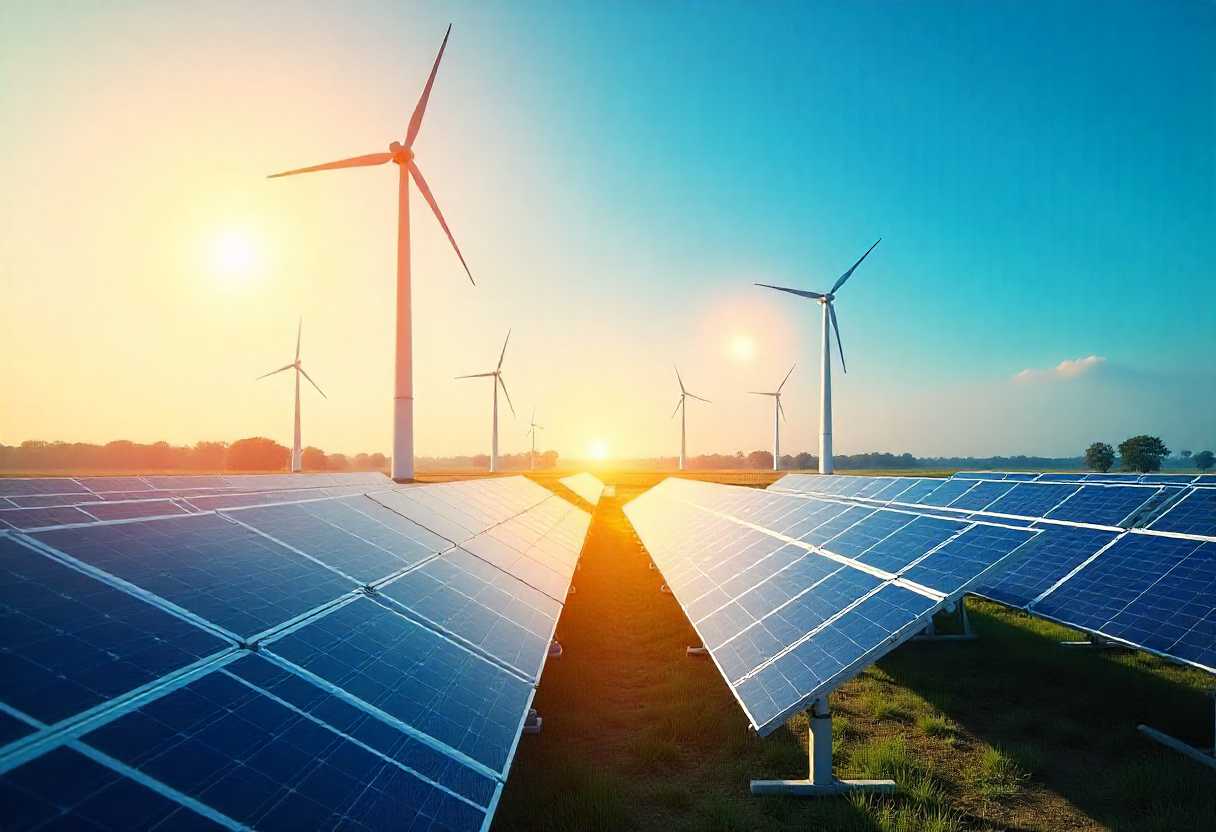
Furthermore, Gujarat is among the first states that have encouraged the setting up of hybrid renewable projects that integrate solar and wind energy at a single location. These projects support the balancing of power output, thus, ensuring that generation takes place even in the case of the solar radiation or wind speeds are changing. Therefore, hybrid systems become more efficient in stabilizing the grid and increasing the overall renewable energy reliability in Gujarat.
Growth in Wind Energy
In addition, Gujarat has doubled down on its success to become a significant contributor of wind energy. Having a coast that stretches more than 1,600 kilometers and having excellent winds, the state has been able to establish huge wind corridors that not only make energy available to local industries but also the national grid. The ongoing changes in turbine technology and the support of the state policy have made efficiency higher and the cost of the project lower.
Boost from Local Manufacturing
The emergence of a robust renewable energy manufacturing ecosystem in the state turns out to be another major factor behind the rapid renewable expansion of Gujarat. The state has multiple solar module, cell, and inverter manufacturing facilities, which also help decrease the dependence on imports and ensure timely project completion.
The local production has been the main reason for the lowering of logistics costs, faster project delivery, and the creation of jobs at different stages of the value chain. The industrial areas of Gujarat such as Sanand and Surat are changing into clean-energy-powered industrial clusters, which is not only a move towards sustainable manufacturing but also attracting global investments.
Strong Transmission and Grid Infrastructure
One of the main factors in Gujarat’s success has been the efficient transmission and grid planning. The state government has invested in green energy corridors extensively to facilitate the power evacuation from renewable parks to consumption centers.
Through farsightedness, Gujarat has already upgraded the grid in areas with high wind generation, such as Kutch and Banaskantha, thus solving the problem of power being wasted. This solid grid base has made it feasible to connect a large volume of fluctuating renewable power without losing stability and dependability.
Rooftop Solar and Distributed Energy
Gujarat was not only the leader in solar adoption from the rooftop but it was also the leader in the country. During the Surya Urja Rooftop Yojana and similar campaigns, the installations of solar panels have been done by thousands of households and businesses, thus highly contributing to the state's renewable mix.
Making use of such a program, more citizens are motivated to produce their own energy through the granting of subsidies and the ease of procedures. Prosumers generate clean energy locally through this decentralised model which is then shared by the consumers. It is a win-win solution for everyone, lowering the pressure on the utility while providing residents with the opportunity to make use of the energy transition.
Economic and Environmental Impact
The hijacking of the economy through the renewable energy is the main reason behind the resounding success of Gujarat. The state has injected the area with billions of rupees, created employment opportunities in manufacture, construction, and maintenance, and is now leading the way in clean-tech innovation.
The switch to renewables in an environment-friendly measure has led to less CO2 emissions and reductions in the levels of air pollution in the atmosphere. Gujarat's renewable development is in line with India's national goals of 500 GW of renewable capacity by 2030 and net-zero emissions by 2070.
Clean, affordable power is also injecting more vigor into Gujarat's industrial sector with the energy-heavy industries such as chemicals, textiles, and manufacturing, benefiting the most as they get access to a reliable and low-cost energy source.
Challenges and the Road Ahead
Gujarat’s accomplishments may be notable, but still, there are some hurdles to overcome. The fast increase of renewable capacity calls for improved grid control, energy storage, and balancing tools to be able to cope with the variations in energy production.
To keep the power supply stable, the state will have to make more of BESS and smart grid technologies investments. Besides, wise land utilization and nature conservation steps will be required to make sure that the expansion does not injure the local ecosystems.
Gujarat with a well-defined plan is eager to increase the capacity of hybrids and storage facilities, expand the use of green hydrogen, and continue to be a leader in clean energy manufacturing. The state’s strategy is proof that huge renewable growth in a short time can still be sustainable if it is supported by policy, technology, and infrastructure.
Conclusion
Gujarat’s transformation into the leader of renewable energy in India is mainly due to the implementation of visionary policies, effective management, and the strong industrial participation. With the combination of solar, wind, and hybrid technologies along with strong factory and grid infrastructure, the state has turned into a model for others to copy.
Indeed, the progression not only strengthens India's renewable energy potential but also exemplifies that clean energy can be beneficial for both the economy and the environment. While India is taking steps towards a greener future, Gujarat is ahead of the pack - driving the nation’s transition to a sustainable and energy-secure tomorrow.