India has fixed its eyes on a better and a cleaner future. Solar energy is taking the lead in this voyage becoming the carrier of sustainable development. The largest measure towards this direction is the introduction of PM Surya Ghar: Muft Bijli Yojana, which is declared in February 2024. The initiative headed by the Ministry of New and Renewable Energy (MNRE) will be able to illuminate homes, cut electricity bills, and enable citizens to produce clean energy by themselves.
Why India Needs Rooftop Solar
India boasts of some of the best growing energy market in the world. The population is increasing and the economy is growing, thus, the electricity demand is increasing. Although coal-based power remains the leader of the pack, it comes with a price of pollution, green house gas emissions, and increased fuel imports.
A smart answer to this is rooftop solar. Households can generate clean energy, decrease their reliance on the grid and support the lofty renewable energy goals of India by making all homes mini power plants. PM Surya Ghar Yojana perfectly suits this vision because it will make rooftop solar affordable and accessible to the ordinary families.
What is PM Surya Ghar: Muft Bijli Yojana?
The scheme was introduced by Prime Minister Narendra Modi on 15 February 2024, and is designed to benefit households who install rooftop solar systems by providing them with financial support. The greatest appeal is that families will get up to 300 units of free electricity per month based on the installed solar capacity.
The government has earmarked a massive ₹75,021 crore for the scheme, targeting 1 crore households across the country by FY 2026-27.
Simply put, it’s not just about saving money — it’s about energy independence and a shift to renewable power at the grassroots level.
PM Surya Ghar: Muft Bijli Yojana
A visionary scheme to deliver free solar power to households while promoting a greener and sustainable future for India.
Key Benefits for Households
-
Free Power Every Month
With the system, families can also produce their own electricity and take up to 300 units a month without any bills to pay. This equates to savings of 15,000–18,000, based on tariffs in the states. -
Generous Subsidy Support
For a 1 kW system, households get ₹30,000 as subsidy.
For 2 kW, the subsidy doubles to ₹60,000.
For systems 3 kW or higher, the maximum subsidy is capped at ₹78,000. -
Reduced Dependence on Grid
In most areas, power outages are frequent and tariffs are increasing. Rooftop solar provides security and tranquility to families. -
Environmental Impact
Every rooftop system reduces carbon emissions. Collectively, 1 crore systems will prevent millions of tonnes of CO₂ from entering the atmosphere. -
Employment and Local Industry Growth
The scheme is expected to generate thousands of jobs for solar installers, vendors, electricians, and manufacturers.
Subsidy Structure Explained
The financial assistance under PM Surya Ghar is designed to make rooftop solar affordable:
- Up to 2 kW capacity → 60% subsidy on benchmark cost.
- 2–3 kW capacity → 40% subsidy on additional capacity.
- Above 3 kW → No subsidy for the extra capacity (but still beneficial through savings).
Eligibility Criteria
The following requirements are required to apply under PM Surya Ghar:
- Must be an Indian citizen.
- Must own the house/roof where panels will be installed.
- Should possess connection with the local distribution company (DISCOM) to electricity.
- The applicant is not supposed to have taken any other subsidy on rooftop solar in the past.
- The roof must be structurally powerful and provide sufficient space to panels.
Read More Articles
How to Apply: Step-by-Step
Application to the scheme is made in such a way that it is easy and clear via the official portal pmsuryahar.gov.in. Here's the process:
-
Registration
Visit the portal, choose your State and DISCOM, and enter your electricity consumer number. -
Application Submission
Fill in your details, upload necessary documents (ID, address proof, electricity bill, roof ownership proof, bank details). -
Approval & Feasibility Check
Your DISCOM will verify feasibility (roof strength, technical aspects, and net metering). -
Select Vendor
Choose an approved vendor from the list available on the portal. -
Installation
Vendor installs the system, DISCOM inspects, and net-metering is set up. -
Subsidy Release
Once everything is approved, the subsidy is directly transferred to your bank account via DBT (Direct Benefit Transfer).
Challenges to Keep in Mind
Although the scheme is tempting, the beneficiaries must know of a few issues that would be practically challenging:
- Delays in Net Metering: DISCOMs in certain states take a long time to grant and install net meters.
- Vendor Selection: The selection of a vendor is also important to eliminate installations of poor quality.
- Initial Investment: Families have to contribute to the initial costs of 40-60 percent despite subsidy.
- Awareness Gap: There are lots of households that are not already aware of the scheme, mostly rural.
The government is dealing with these problems by using outreach programs and DISCOM incentives.
Why This Scheme Matters
The PM Surya Ghar Yojana is a welfare scheme more than a welfare scheme. It belongs to the overall energy revolution in India. India has set the target of 500 GW of renewable energy by 2030. Solar rooftops will be an important part in this process.
The scheme can also be seen as a change in mindset: no longer will consumers have to depend on utilities, now, the households generate clean energy on their own. This prosumers model is the future energy system the world over.
Conclusion:
Muft Bijli Yojana: PM Surya Ghar is an ambitious and opportune program. It will empower its citizens, lower household costs, generate employment and move India nearer to its clean energy ambitions. Rooftop solar will cease to be a far-fetched fantasy to those families who are fed with increasing bills and frequent power blackouts.
You have just the right time to apply in case you have a house with an appropriate roof. In this way you are both saving money and making a green self-reliant India.
Read More:
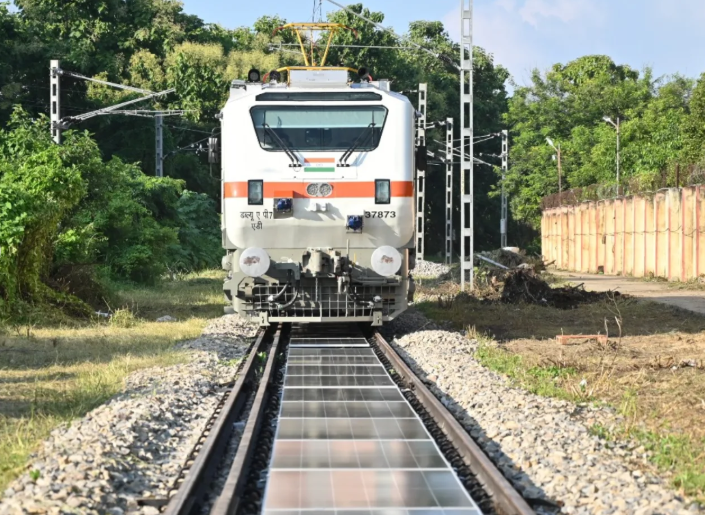
Discover how Indian Railways is testing innovative solar solutions. Read the full story on removable solar panels in Varanasi: Click here.