Maharashtra Launches SMART Solar Scheme - Making Solar Power Affordable for Every Home
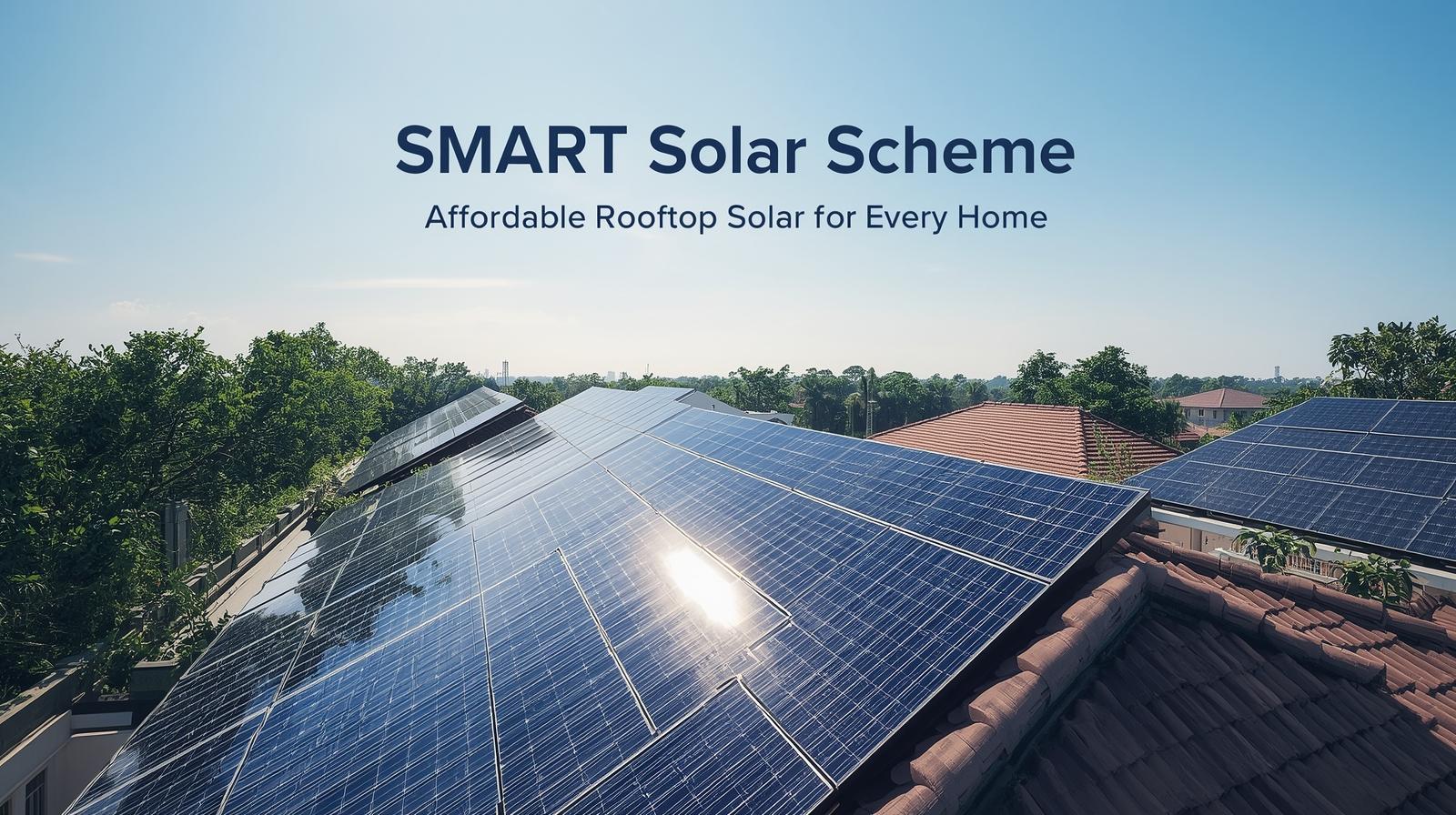
The Maharashtra has gone a long way in making sustainable living a reality with the initiation of the SMART Solar Scheme, a program that aims at ensuring that the rooftop solar power becomes affordable to those households that require it most. This is not only the push to consume renewable energy but also to reduce electricity bills, give the poor a sense of empowerment, and a cleaner, green source of energy in the future of the state.
Why the Scheme Matters
The issue of electricity has always been a worry to many households particularly those with low income earners. Consider a family with less electricity consumption of less than 100 units/month. While their consumption is low, the burden of bills can still strain their budget. The SMART Solar Scheme addresses this by making it possible for such households to generate their own electricity through solar panels installed on their rooftops.
It is a program that does not only save money. Families also help the environment by installing solar-powered energy and thus reduce carbon emissions. In the case of Maharashtra, which has high vision of renewable energy, this scheme will be a rational move towards achieving the set targets as well as assisting its people.
Who Can Benefit?
The SMART Solar Scheme targets homes that can easily be neglected by the large subsidy schemes. The targeted households are:
- Families that live below poverty line (BPL).
- Scheduled Castes and Scheduled Tribes.
- Weaker sectors economically that consume less than 100 units of electricity in a month.
The scheme has also been focusing on remote or underdeveloped regions such as Melghat, Chandrapur, and Gadchiroli in addition to targeting these groups. The concept is to ensure that clean energy is affordable to the people who are not very close to urban areas.
How the Subsidy Works
The subsidy system will ensure that solar installation is affordable, even almost free. Here’s how it breaks down:
- BPL Families: In a typical 1 kW system that will cost approximately 50,000, the central government is giving 30,000, state government is offering 17,500, and the household is paying 2,500 only.
- SC/ST Families: They only pay 5,000 amount after being given central and state subsidies.
- Other Economically Weaker Households: They will pay 10,000, and the balance will be subsidized.
It implies that even the households that have extremely scarce resources will finally be able to use solar power but do not have to be concerned about the initial expenses.
Implementation and Support
The scheme is to be rolled out by the Maharashtra State Electricity Distribution Company Limited (MSEDCL). They will ensure the rooftop solar systems are installed, monitored and maintained so that the households do not experience technical difficulties. The government has put in place a serious commitment to clean energy by indicating its intention to spend more than 650 crore to this initiative in the next two financial years.
Real-Life Impact
Given the case of a small household in Chandrapur. They now spend approximately 1200 in a month on electricity. Their electricity needs are met with home production, most of it, with a 1 kW solar system under the SMART Solar Scheme. This does not only conserve money, but any surplus amount of electricity can be given back into the grid, thus producing a small source of added revenue.
This is a paradigm shift in most families. It has benefits beyond financial savings in that, it offers energy self-sufficiency and the insurance of a constant power supply even in places where power failures are frequent.
Why This Matters Beyond Bills
This is not a money program, but an opportunity and sustainability program. Maharashtra is developing a culture of clean energy conscience by making households embrace solar energy. Children who grow up in such homes are taught through experience about renewable energy and communities are convinced that they can count on environmentally friendly solutions.
In addition, the program promotes the environmental objectives of the state through decreased use of fossil fuels and minimized greenhouse gas emissions. Each of the rooftop solar panels installed by the SMART Solar Scheme will make Maharashtra a greener and healthier place.
Conclusion
The SMART Solar Scheme is an ideal illustration of policy and fulfilling actual human need. It is not only a government initiative, it is the life line to families that would prefer to lower their bills, use sustainable energy, and have a better future. Maharashtra is showing that clean energy can be not only fair but it can also be pragmatic and empowering by making solar energy available.
To a family with low income in the entire state, it is not merely a subsidy, but an opportunity to gain control of their energy, save some cash and leave behind a cleaner environment to their future generations. The SMART Solar Scheme is one step towards a future where no household regardless of their income will fail to utilise the power of the sun.
Madhya Pradesh Trails in PM Surya Ghar Rooftop Solar Drive
As of July 2025, MP achieved only 627 MW rooftop solar, lagging behind Gujarat, Maharashtra, and Rajasthan. Challenges include surcharges, slow subsidies, and low awareness, though regions like Indore and Malwa-Nimar show strong progress.
PM Surya Ghar: Muft Bijli Yojana – Free Power, Green Future
Introduced in February 2024, this scheme offers households up to 300 units of free solar power every month with subsidies up to ₹78,000, targeting 1 crore homes by 2026-27.