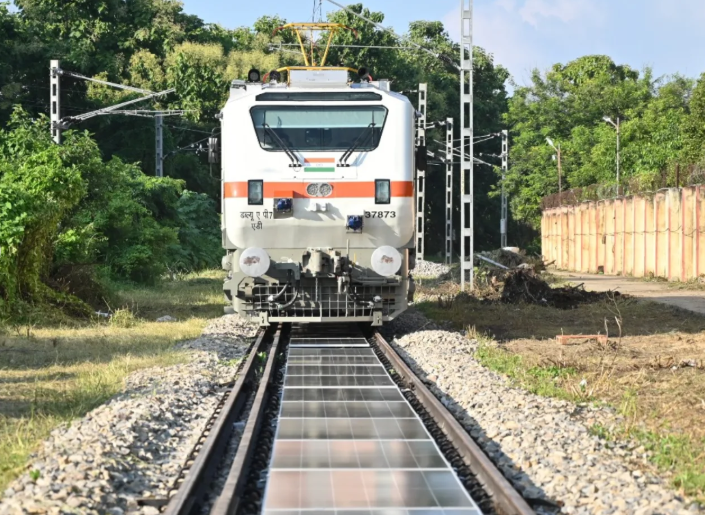
The Union Government has selected the village of Hallimysuru in Holenarasipura taluk of Hassan district to be developed as a Model Solar Village under the PM-Surya Ghar: Muft Bijli Yojana, which aims to create villages that are renewable energy independent, and provide 24x7 clean electricity to homes, farms, and community facilities.
The Model Solar Village programme is an effort to promote distributed renewable energy in rural India. Hallimysuru will utilize rooftop solar systems, solar streetlights, agricultural pump sets, and community solar infrastructure to develop a Model Solar Village and demonstrate a clean energy transition.
The government hopes these villages are to be used as learning sites and be scaled up and replicated in other places to ensure solar energy is understood as a clean and reliable energy source.
Funding and Scale
The programme has a total budget of ₹800 crore.
Each selected village, including Hallimysuru, will receive ₹1 crore as Central Financial Assistance (CFA).
At the household level, subsidies under the PM-Surya Ghar scheme include:
- ₹30,000 for 1 kW systems
- ₹60,000 for 2 kW systems
- ₹78,000 for 3 kW systems
In addition, the broader PM-Surya Ghar Yojana targets one crore households nationwide, backed by ₹75,021 crore of funding up to FY 2026–27.
Benefits for Farmers
Agriculture being central to Hallimysuru’s economy, farmers are among the largest beneficiaries:
- Solar Pumps under PM-KUSUM B: Farmers can avail up to 80% subsidy (30% central + 50% state share), paying only 20% of the total cost.
- Feeder-level Solarisation (KUSUM-C): Ensures reliable daytime power supply for pump sets, reducing dependency on grid electricity.
- Additional Income: Farmers leasing land for solar use can earn up to ₹25,000 per acre annually.
Selection Process & Implementation
Hallimysuru was chosen through a competitive selection process managed by a District Level Committee (DLC) and the State Renewable Energy Development Agency. Eligibility required the village to have a population of over 5,000 (or 2,000 in special category states).
The final selection depended on the amount of renewable energy capacity installed within six months of shortlisting. Hallimysuru emerged successful and is now preparing a Detailed Project Report (DPR), which will guide the rollout of solar infrastructure across rooftops, farms, schools, and community spaces.
Expected Impact
- Households: Free or low-cost electricity payments through rooftop solar
- Farmers: Irrigation electric power during the day and rent of their land
- Community: Stable, sustainable energy source to schools, health care centres and other facilities used by the community
- Environment: Less carbon emissions and less dependence on fossil fuel
Hallimysuru is expected to become a model of clean energy adoption not just for Karnataka, but for the entire nation.
Conclusion
Hallimysuru being a Model Solar Village is a landmark in the green energy in India. The village is on its way to energy independence with government assistance, generous subsidies, and community involvement in order to also spread the energy transformation using solar power to other rural areas of India.