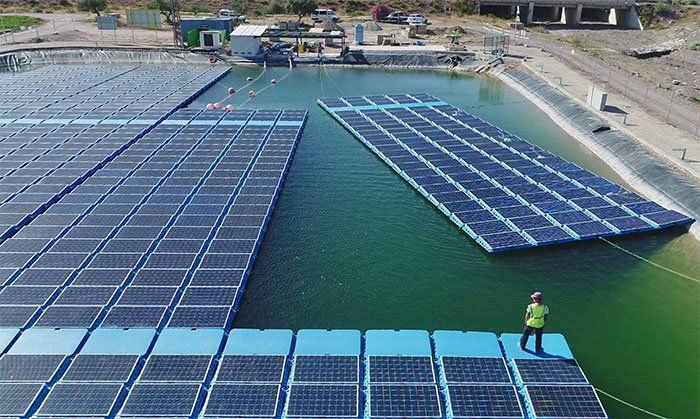
Gujarat’s Green Energy Corridor Project is set to contribute to increasing clean power transmission
Ahmedabad, Gujarat — Gujarat has taken another leap towards achieving its renewable energy goals by investing an estimated ₹29,000 crore into the third lot of its Green Energy Corridor (GEC-III). With GEC-III becoming a reality, it will ultimately enable the state to transform its power transmission infrastructure to accommodate ever-increasing amounts of clean energy from more solar and wind power plants.
A Green Energy Corridor is a high capacity transmission system that allows renewable energy to be evacuated from a generation hub to wherever a consumption center, thereby transporting and evacuating renewable energy more effectively. The new GEC-III project will consist of approximately 3,430 circuit kilometers of 765kV lines and 860 circuit kilometers of 400kV lines, 6 of the former and 4 of the latter substations, and additionally 4 STATCOM devices to mitigate voltage fluctuations and assist in addressing fluctuating reactive power, thus helping to stabilize the grid.
This new corridor will connect a number of important renewable areas in Gujarat including Kutch, Jamnagar-Bet Dwarka, Banaskantha-Patan, and central Gujarat, which are recognized as large-scale solar and wind project sites. The corridor itself has been designed to send renewable power generated at these sites to the grid, tackling power transmission challenges.
Gujarat Steps Up in India’s Renewable Energy Journey via Investment
Gujarat has set a target of 42 GW of renewable energy capacity by 2035. Currently, renewable energy represents around 58% of the total power capacity of the state, a number that is much higher than the national average. A key part of helping Gujarat achieve this target depends on the successful completion of the Green Energy Corridor projects.
The state has already completed the first phase (GEC-I) of the Green Energy Corridor; the second phase (GEC-II) is actively underway with a completion date of March 2027. With the construction of GEC-III, the grid infrastructure of the state will be better able to support volume increases of renewable energy types, which in turn will aid India’s efforts to (1) transition away from carbon fuels, and (2) achieve its clean energy transition mission.
"Green Energy Corridor is a major milestone in Gujarat's clean energy future, allowing for large scale integration of renewable power and maintaining grid reliability."
Upgrading Distribution Infrastructure for Better Power Reliability
In addition to the upgrades to transmission capacity, Gujarat is also focused on projects that update distribution infrastructure through a revamped Distribution Sector Scheme (RDSS) (11889774). Distribution infrastructure investments include underground cabling, and digital infrastructure platforms for grid management, to improve reliability of power, and reduce losses in distribution.
According to energy experts, Gujarat's experience with the Green Energy Corridor highlights the role of infrastructure investments to help unlock value of renewable energy resources and puts the state of Gujarat ahead of its peers in the genealogies of India's green energy landscape. The project also supports private sector resource development in renewable energy as the investment in modern transmission infrastructure creates a significant layer of green energy potential for private sector investment in renewable energy projects.
Setting a Benchmark for India’s Renewable Energy Future
Gujarat's Green Energy Corridor is not only important to for the state, but also sets an example for the rest of India as they seek to increase their renewable energy capacity and stabilize the grid. This project fits well into India's national goals of reaching net-zero emissions by 2070 and increasing renewable energy capacity to 500 GW by 2030.
This development comes at a critical time as India propels toward cleaner, more sustainable energy sources to meet its electricity needs as electricity demand rises and the country lowers its carbon footprint.